
Chapter 1
Daughter Refuses to Eat Out With Mother After Sudden Restaurant Rejection
Navigating the early stages of parenthood is an exhausting, high-stakes balancing act. For new mothers, the simple act of stepping outside the home with an infant requires meticulous logistical planning, emotional resilience, and often, the hope of a helping hand from family members. When a casual lunch date between a young mother and her own mom was scheduled at a local restaurant, it seemed like the perfect opportunity to secure a brief moment of adult conversation and enjoy a hot meal. Instead, this family outing transformed into a tense interpersonal standoff over a plate of cold food, exposing deep-seated friction and a breakdown of communication between two generations.
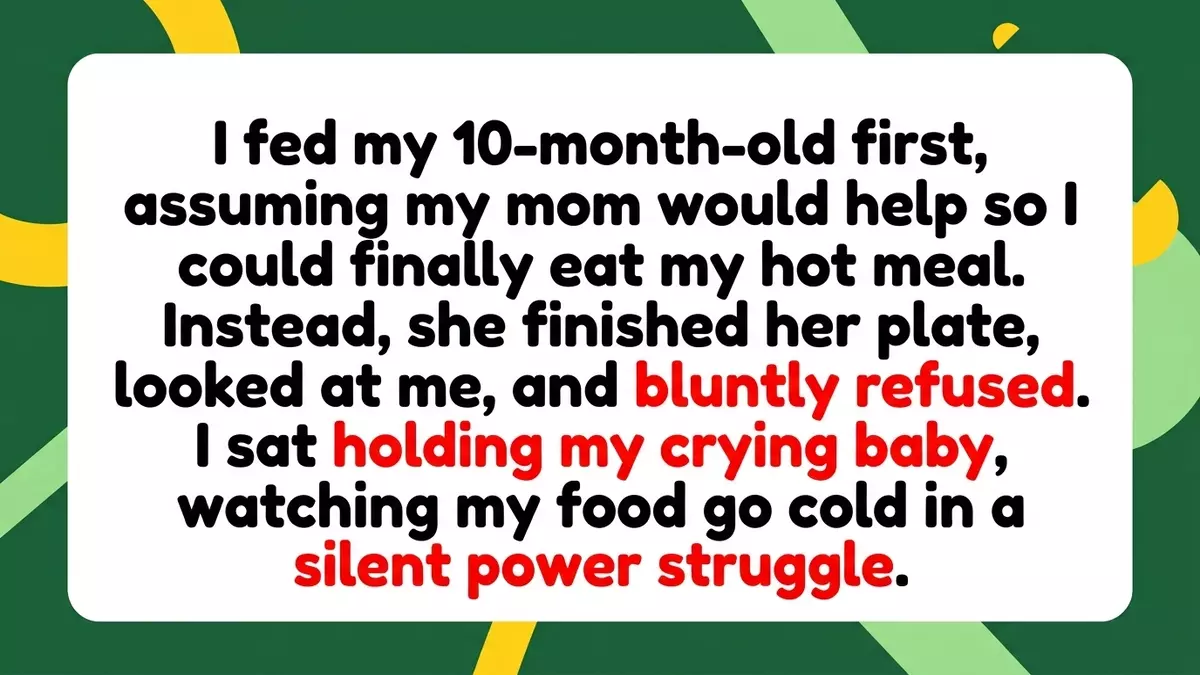
The conflict emerged from what the daughter assumed was a mutually understood routine. During previous family outings, she would carefully feed her 10-month-old daughter first, keeping the infant content, before handing her over to the grandmother so she could finally eat her own meal. However, during this particular lunch, the grandmother finished her plate and bluntly refused to take the baby. Left holding a fussy child with an untouched meal in front of her, the daughter felt blindsided and rejected, triggering a year-long emotional rift that has completely altered their family dynamic.

Daughter Refuses to Eat Out With Mother After Sudden Restaurant Rejection
The Danger of the "Silent Contract" in Family Relationships
The explosive end to this restaurant lunch provides an excellent case study in a common psychological phenomenon known as the silent contract. Silent contracts are the unwritten, unspoken rules and expectations we place on the people closest to us without ever explicitly verbalizing them. We assume that because a pattern has occurred before, or because a relationship possesses a certain structural tie, the other person automatically agrees to the same set of rules.
In this instance, the young mother operating under a heavy load of chronic sleep deprivation relied on historical patterns. She assumed her mother would naturally step into the caregiver role the moment her own plate was empty.
"Unspoken expectations almost always breed intense resentment because neither party is operating from the same set of boundaries or operational rules."
When the grandmother prioritized her own comfort and declined to hold the baby, the silent contract shattered. Because the expectation was never explicitly discussed before stepping out the door, the refusal felt like a targeted personal betrayal rather than a simple assertion of personal autonomy.