
Chapter 1
Husband Accuses Her of ‘Cheating’ After Three Dates, Then Messages Her Ex-Husband to ‘Look Out’ for Him
We all know that chaotic, nerve-wracking feeling of dipping your toes back into the dating pool after a long-term relationship ends. The landscape has drastically shifted, leaving many to navigate unwritten digital rules they never had to learn before. For one newly divorced woman, finding her footing in modern dating etiquette proved to be an absolute minefield when her attempt at honest exploration collided head-on with a partner’s intense expectations.
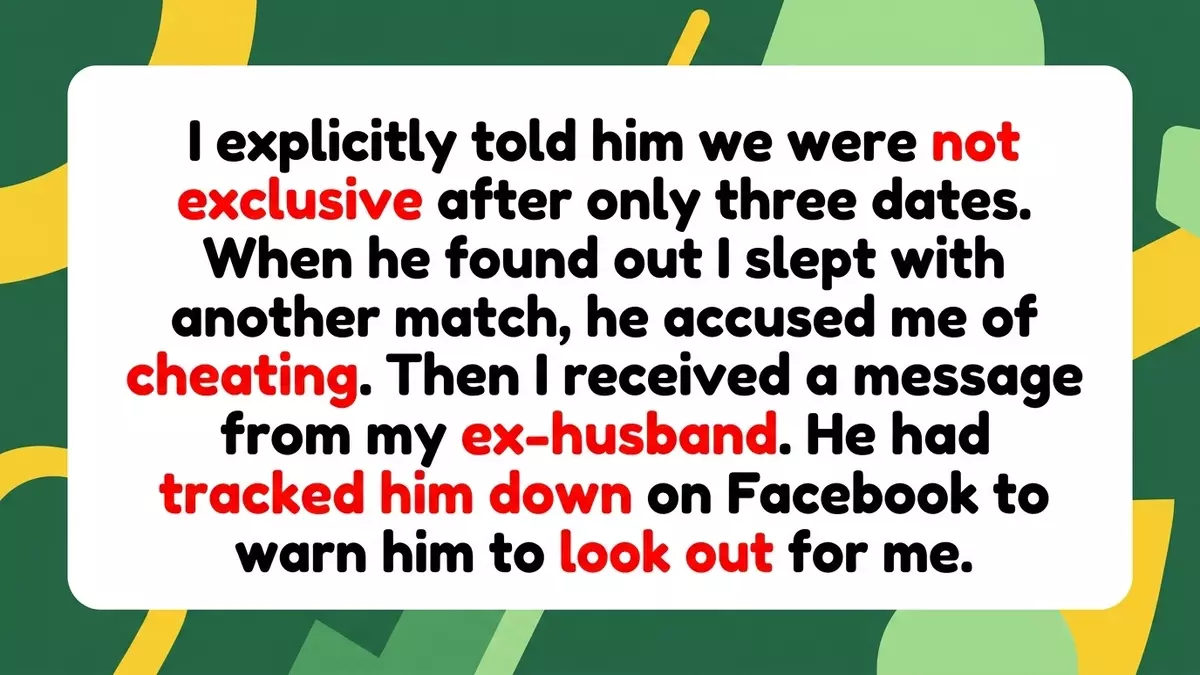
Having spent over a decade off the market, she decided to try dating multiple people on Hinge to see what felt right. She was incredibly upfront about her personal boundaries, explicitly stating twice that she wasn't exclusive without an official relationship title. Yet, after she went on just three dates with a man named Bill—and later hooked up with another match—she found herself accused of deep betrayal. What started as casual coffee, home-baked cookies, and playlist sharing quickly spiraled into a dramatic saga involving Facebook messages to her ex-husband and intense guilt-tripping.

Husband Accuses Her of ‘Cheating’ After Three Dates, Then Messages Her Ex-Husband to ‘Look Out’ for Him
The Clash of Explicit Boundaries vs. Implicit Expectations
This exhausting back-and-forth highlights the messy, often painful reality of modern "situationships" and mismatched expectations. In contemporary dating, psychologists often refer to this conflict as a classic failure to Define the Relationship (DTR). While the author relied on explicit, verbal boundaries, her partner operated entirely on implicit milestones—assuming that domestic gestures like baking cookies, daily texting, and virtual introductions to family constituted an unspoken commitment.
According to relationship expert Dr. Wendy Walsh, many people fall into the trap of “assumed exclusivity,” projectively assuming their partner shares their pace and dating ethics. However, research from the renowned relationship specialists at The Gottman Institute emphasizes that trust cannot be built on unspoken assumptions; it requires active, mutual agreement.
Explicit Verbal Boundaries ("Not Exclusive")
       VS.
Implicit Milestone Assumptions (Baking, Texting, Playlists)
       │
       └──> Assumed Exclusivity Trap ──> Toxic Boundary Breakdown
Bill’s decision to cross the digital boundary and contact the author’s ex-spouse represents a massive boundary violation, shifting the dynamic from a simple misunderstanding into control-seeking behavior. Furthermore, weaponizing guilt rather than accepting a clearly communicated boundary often points to deeper attachment insecurities. If one partner explicitly states they are not exclusive, the other must voice their discomfort right then, rather than harboring silent expectations and weaponizing them later on as “cheating.”