
Chapter 3
Match Activities to Physical Capabilities
Before confirming group plans, explicitly verify the expected pace, distance, and gear requirements. If there is any ambiguity regarding equipment—such as footwear or wheels—clarify the expectations before leaving the staging area.
Adopt a Non-Negotiable "No Split" Policy
A safe group excursion requires a firm agreement that the group stays together. If a split becomes absolutely necessary, clear meeting points, designated wait times, and redundant communication methods must be established before anyone separates.
Conclusion
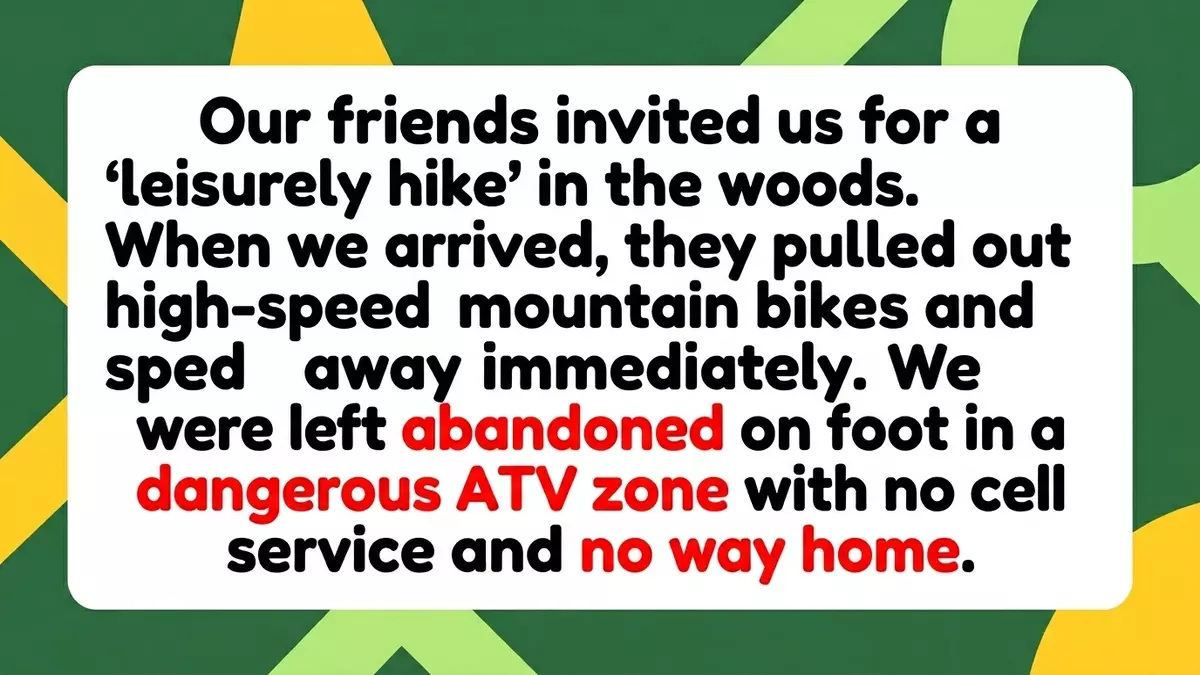
A genuine group hike is about sharing a journey together, experiencing nature as a collective unit, and ensuring everyone returns to the staging area safely. When adult friends prioritize their own high-speed adventure at the physical expense of those on foot, they forfeit the privilege of loyalty. For this tired mother and her husband, the grueling walk through the active ATV zone provided a clear, undeniable map of exactly where they stood in that social circle—serving as a stark reminder that sometimes, it is better to seek out new trail partners who value safety, respect, and shared experiences.
Frequently Asked Questions
What are the standard safety rules for hiking on a multi-use or ATV trail?
When hiking on a trail shared with motorized vehicles, pedestrians must yield the right-of-way. Stay to the far side of the trail, listen carefully for approaching engines, and wear bright, visible clothing. Always hike in a single file line when vehicles are passing to minimize the risk of a collision.
Why is separating a group in the wilderness considered so dangerous?
Separating a group increases the vulnerability of the individuals left behind. If the abandoned party encounters an emergency—such as a medical crisis, navigation error, or wildlife encounter—they are left without the physical support, extra supplies, or communication tools of the larger group.
How should you handle a friend who consistently disrespects your time?
If a friend repeatedly disregards your schedule, limits, or safety, it is essential to establish firm boundaries. Voice your concerns directly using "I" statements, such as: "I felt unsafe and undervalued when the group rode ahead on bikes." If the behavior persists or the apology is dismissive, it may be time to distance yourself from the relationship.
What essential gear should you always carry on a basic hike?
Even on a short, leisurely walk, you should always carry the "Ten Essentials." This includes navigation tools (offline maps/compass), plenty of water, nutritious snacks, first-aid supplies, a multi-tool or knife, a flashlight or headlamp, sun protection, and emergency shelter or extra clothing layers.