
Chapter 2
From Attire Demands to Physical Boundaries Violation
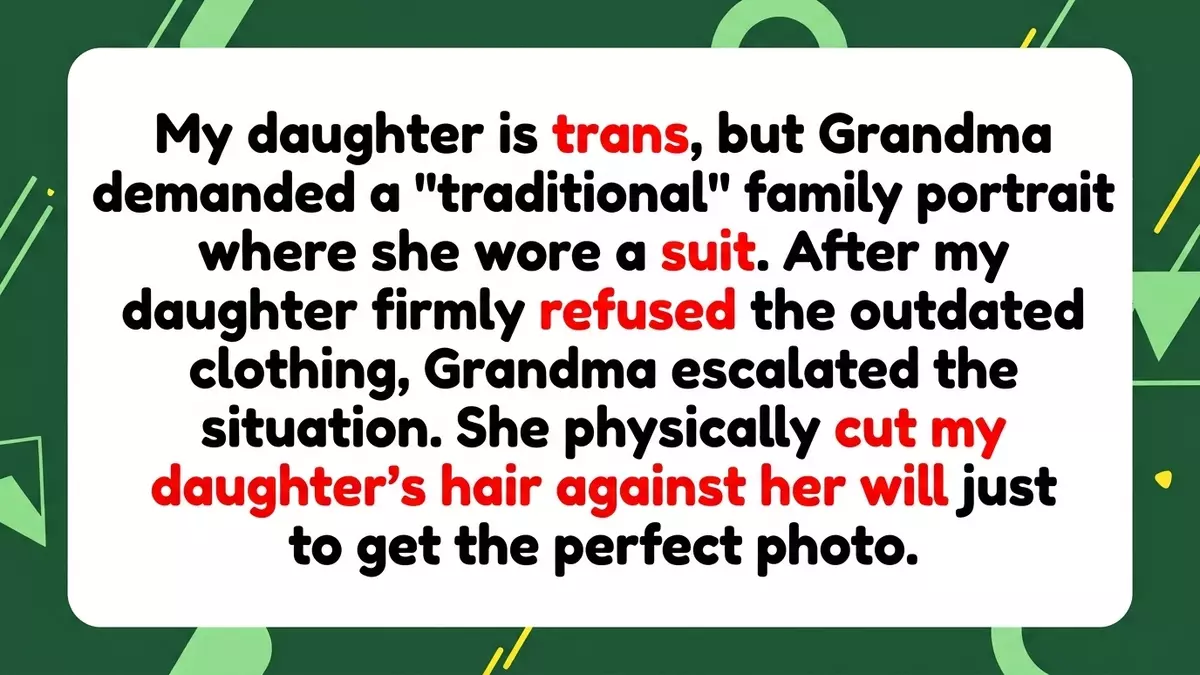
The situation escalated from a heated verbal disagreement into a physical boundary breakdown. When the teenager firmly stood her ground and refused to wear the suit, the grandmother bypassed all parental authorization and structural boundaries. In an aggressive effort to force compliance, she physically cut the teenager’s hair against her will, shattering the young girl's sense of physical safety.
Recognizing that her safety had been completely compromised, the granddaughter displayed immense resilience by immediately removing herself from the physical environment and contacting her mother for emergency pickup. The sudden, unauthorized alteration of a person's hair stands as a severe violation of physical autonomy, converting a standard family visit into a traumatic event.
The Public and Legal Backlash: Unanimous Community Support
When the mother shared the reality of the visitation breakdown on public forums, the online community responded with a massive wave of protective outrage. The consensus among thousands of objective observers was virtually unanimous:
-
Designation of Physical Assault: The vast majority of commentators completely rejected the idea that this was a private household disagreement. They pointed out that cutting someone’s hair without their explicit consent constitutes a physical violation that borders on criminal battery and unlawful assault.
-
The Psychological Weight of Hair: Many individuals shared personal testimonies highlighting how hair serves as a critical biological and psychological anchor during a gender transition. For many trans individuals, growing out their hair is a hard-won physical milestone; violating that asset is a direct attempt to erase their progress.
The community stance was clear: the family hierarchy does not grant an individual the legal right to inflict physical changes on a child's body. The mother has since initiated steps to alter the formal custody and visitation agreements through the legal system, ensuring the grandmother is permanently denied unsupervised access to the children.
Actions to Protect and Rebuild a Teenager's Confidence
Supporting an adolescent through the aftermath of a public rejection requires deliberate, trauma-informed care. Parents and allies can utilize these four structured strategies to help a teenager process the event and rebuild their sense of security:
-
Enforce Immediate No-Contact Boundaries: Establish an ironclad physical barrier between the child and the perpetrator. The teenager must see that their parents are willing to permanently cut off toxic relatives to safeguard their peace, proving that their identity is worth defending.
-
Secure Specialized Professional Therapy: Connect the adolescent with a licensed mental health professional who specializes in LGBTQ+ youth dynamics and trauma recovery. Therapy provides a safe, neutral space to untangle the emotional shock of the rejection without taking on familial guilt.